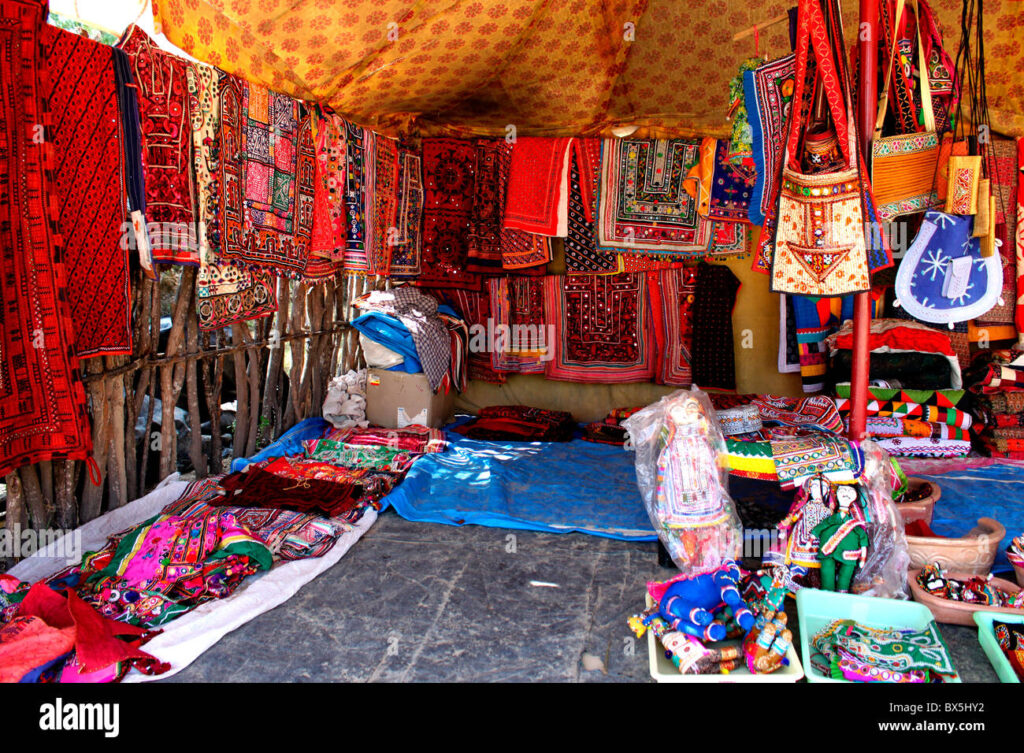
Imagine you are in a world that’s full of color and life. Every stitch has a story to tell every bead has a secret from a time ago and every piece of embroidery has the spirit of Gujarats Kutch region in it. The handicrafts from Kutch are not things people make. They are special things that have been passed down from generation to generation. They come from the lands of Kutch, a place in western India where people move from one place to another and where artists are very skilled and strong. Kutch handicrafts are a part of the Kutch region. The Kutch region is a district in India. It is famous for people who move from one place to another and, for artists who can make beautiful things even in difficult conditions. These crafts started a time ago with people like the Rabaris, Ahirs and Sodhas who made these crafts very special by adding embroidery, mirror work, block printing and pottery to them. For more such handicrafts, you can visit the local market of Bhuj, which is near Modernhouse Home Stay Bhuj.
Kutchi handicrafts are really important to the people who make them. They show who these people are and what they believe in. The women are the ones who keep these crafts alive. They make things like wall pieces and things to sell at the market. This helps their families have the things they need. Now you can find these handicrafts in homes. They make a room feel cozy and special with things like cushions with embroidery and quilts with mirrors sewn into them. These things are made by hand. That is what makes them so nice. In a world that’s always in a hurry Kutchi handicrafts remind us that it is okay to slow down. They are perfect, for people who are traveling and want to feel like they are really experiencing the culture. Kutchi handicrafts are a part of this culture.
1. Extinct Kutchi Art: Echoes of Lost Mastery
The Kutchi treasures are really special. Not all of them have lasted over time. Some things that people used to make, like art are not as popular as they used to be. This is because of changes that have happened like people getting new jobs and wanting different things.
The Lacquerware of Dhordo is an example of this. It was a delicate craft where people would paint toys and boxes with special lacquer. They would also put pearls and gold leaf on these things to make them look really nice. Dhordo was popular, until the middle of the century.. Then it started to disappear. This happened because new kinds of paint became available and young people did not want to do this kind of work. They did not like the work and the bad smells that came with making the Dhordo.
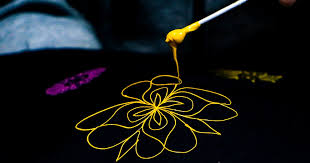
The Banni Rogan Art is something that is not done much anymore. This is a kind of painting on cloth where they use red earth and lime to make the colors. The women from the Rabari tribe used to make these paintings to show stories and the places their people moved to. But then people started using dyes and machines to print pictures so nobody wanted the old kind of paintings by the 1980s.The Kutchhi pottery, with Aari embroidery motifs is another thing that people do not make much as they used to. This is a kind of pottery that is made from earth and has thread stitched into it.. People started using plastic instead of earth to make things so this kind of pottery is not as popular.
These old ways of making things are disappearing because many people are moving to cities and they do not need these things anymore. Also people can buy things that are made by machines. They are cheaper so they do not want to pay for things that are made by hand.. It is also because nobody is writing down how to make these things so the knowledge is being lost. Their ghosts are still with us. They make us want to bring back what we had before. We need to take care of the things we have now before they are gone too. Their ghosts remind us to appreciate what is left before more things slip away, from us and we lose them forever. We have to cherish these things because once they are gone they are really gone.
2. Most Demanding Handicraft Work: Today’s Treasured Stars
The Kutchi handicrafts are really doing well even when other things are not going so great. People around the world want to buy them because they are so unique and beautiful. The best one is Suf embroidery. It is the popular one.
- Suf embroidery is a kind of stitching that comes from villages like Ajrakhpur where people follow Sufi ideas. It has lots of patterns made with threads of different colors like red, blue and green. These patterns are all. Mean good things like being safe and having a good life. What is really cool about Suf embroidery is that no two pieces are the same. This makes it really special for people who like to collect things like decorations, for their homes or bedrooms. They can use Suf embroidery to make their homes look really interesting and different.
- Ajrakh block printing which is really something special that UNESCO has recognized. The people who make it carve blocks by hand and then dip them in colors that come from things like indigo, madder and pomegranate. They use these blocks to make patterns on fabric. It takes a lot of time up to 21 days for one piece. Ajrakh block printing is liked because it is good, for the earth and the designs are really interesting. These designs can make your curtains or table runners look really nice in a home. Ajrakh block printing is a way to add some style to a room.
- “Bandhani tie-dye”. “Mirror work (abhala)” are really popular. The small knots in “ tie-dye” make pretty star patterns on sarees and dupattas. On the hand “mirror work (abhala)” has mirror pieces in the embroidery that shine like stars in the desert. This makes them look great on jackets or lampshades.
- What makes “tie-dye” and “mirror work (abhala)” special is that they are sustainable. They use vegetable dyes, which’s good for the environment. Also each pattern in tie-dye and mirror work (abhala) tells a story from tribal lore. After the Rann Utsav became famous people from around the world started buying Bandhani tie-dye. Mirror work (abhala), from boutiques. This is because tie-dye and mirror work (abhala) have a unique Kutchi style that people like and it can be mixed with modern designs.
3. Guardians of the Craft: Who is Preserving the Kutchi Legacy
The Kutchi legacy is very important. People who are involved in this are doing a job. They are the guardians of the craft. These people are working hard to preserve the Kutchi legacy.
- The flame of Kutchi crafts is still burning because of the work of the artisans and the organizations that support them. They are doing this even when things are very tough. Women are leading the way with groups like “Kutch Craft” and “Shrujan”. Dr. Ismail Mohammed started “Shrujan” in 1969 – the Organisation is teaching a lot of women in Bhujodi village over 1,200 how to make interesting designs and they are paying them a fair price, for their work. They are also bringing back patterns that people had forgotten about.
- The places where they do their embroidery are helping women who have lost their husbands and people who move from place to place. These women are now able to use their skills to earn a living because of “Kutch Craft” and “Shrujan”
- There are people who are doing things. For example Dayabhai Rabari – is a good Suf embroiderer. He is keeping the tribal patterns alive even when cities are growing. Then there is Khatri Ismail Suleman. His family has been doing Ajrakh in Dhamadka for a time. They are saying no to chemical dyes.
- Some groups like “Kala Raksha” are teaching people things. They are mixing ways, with modern fashion design. This way they can sell things to people who live in cities.
There are a lot of challenges that the people of Kutch face. For example climate change is really bad for the plants that they use to make dye. Also a lot of things are being imported into the market, which makes it hard for the local people to sell their own things. On top of that many young people are leaving Kutch to find work somewhere else.
The government is trying to help with things like the Kutch District Handicraft Association. They are also working with people who do eco-tourism to find markets for Kutch handicrafts. The people who are doing this work are not just saving the ways of making things they are also helping to keep the spirit of Kutch alive. They want to make sure that Kutch handicrafts continue to thrive, not in peoples homes but also in other places. Kutch handicrafts are very important, to the people of Kutch.
4. Insights for Tourists: Dive into Kutchi Magic
Tourists Kutch is calling you. You should really visit Kutch during the Rann Utsav. This is from November to February. You will see some cool white salt desert camps. They have demos and things like that.
- You can also go to Bhujodi village. They have some Suf weaves.. You can go to Ajrakhpur. They have printing workshops. You can book these through the Khamir Craft Resource Centre.
- If you want to buy some things you can go to the Shrujan Museum. You can go to the markets, in Bhuj. You can find some nice embroidered stoles. They cost around ₹500 to ₹2000. You can also find some Ajrakh scarves. Just remember to haggle when you are buying the Rann Utsav things and the Kutch things.
- When you buy things from artisans directly you are helping them out. Do not go to tourist traps. If you want to make sure something is real look for things that’re not perfect. Real pieces usually have stitches that’re not all the same and colors that have faded a little bit because they are made by hand.
- You can put these kinds of things in your home to make it feel special. For example a quilt with mirror work on it can make a room feel like it is in the desert. When you buy these things you are helping to keep ways of making things alive. Buying things from artisans is a way to shop because it is fair, to them. Bhuj is the central point well connected with air port for tourists and for affordable home stay visit Modernhouse Home stay.
5. FAQ: Your Kutchi Handicraft Queries Answered
1. Where can I buy authentic Kutchi handicrafts?
Head to artisan villages like Bhujodi or Dhamadka, or trusted outlets like Shrujan in Bhuj and Khamir in Kukma. Online, check official sites like kutchcraft.org.
2. How do I identify genuine pieces?
When you are buying something that’s handmade look for things that are not perfect. Handmade things often have handmade irregularities. You should also smell the dye scents. These scents are earthy. Do not smell like chemicals. Sometimes the person who made the item will leave a signature. Fakes are often perfect. Have glossy finishes. This is because they are made by machines. Real handmade things are usually not perfectly symmetrical. They do not have finishes, like the fake ones do. Look for handmade irregularities and natural dye scents like scents and artisan signatures to make sure you are getting a real handmade item.
3. What’s the best time to visit Kutch for handicrafts?
Winter is the time to visit for Rann Utsav this is from October to March. The weather is really nice during this time. On the hand summers are very hot, for Rann Utsav it gets so hot that people have to stop working outside.
4. Are Kutchi crafts eco-friendly?
Yes. Most of the things people buy use dyes and sustainable materials. You should definitely check with the sellers to make sure because it is always an idea to verify this information, about the natural dyes and sustainable materials.
5. Where can I find affordable family friendly stay in Bhuj?
Modernhouse is close to tourist spots like Smritivan, Pragmahal, Local market for shopping and one can find economic Home stay with basic facility as well as fresh home made snacks as per your order.